Period:
2025
Period:
2025
Period:
2025
Period:
2025
>
Scaling a mistake...
Scaling a mistake: Why "Sync successful" can become the biggest lie in complex SaaS
Date: 14 May, 2026
POV: Your system says "Sync successful." Your Chief Marketing Officer approves €100K in ad spend based on that data. But the attribution logic was wrong from day one.
Everything looks correct: API connected, backfill complete, green checkmarks across the setup. And yet the configuration creates false confidence:
-
Attribution windows misaligned
-
Revenue mapped to the wrong time frame
-
API updates breaking historical comparability
-
Sync delays hiding conversion lags
Performance looks strong, so the team scales.
In reality, they're scaling a mistake.
I've seen this pattern across complex domains. In healthcare, misconfiguration affects safety. In smart infrastructure, it wastes operational capacity. In analytics, it burns budget. The context changes. The pattern doesn't.
"Where’s the money, Lebowski?"
Earlier this year, I spent some time to audit the user flow for a platform designed to help marketers activate and analyze their data. The goal on the surface seemed simple: let users add a new data stream.
However, as I drilled deeper into the domain, a territory that was initially new to me, I realized that I was asked the wrong questions. The questions were not: "How to add a new data stream?" or "How to improve this flow?"
I started to think "Where’s the money, Lebowski (Marketers)? Specifically this thought led me to the real question:
"Why is the marketer adding the stream, and is the system helping them protect their budget, or just helping them scale a mistake?"
User context and problem framing
Together with my digital co-pilots friends like Gemini and NotebookLM, I processed mountains of technical documentation, API schemas, and industry use cases significantly faster than I could have on my own just a few years ago.
This desk-research allowed me to build a Persona and shift my focus to what business reality and understand the "why" before I could fix the "how." To get the full picture, I framed the Persona around the next:
-
Who they are? Their role and seniority.
-
Their background and context. The environment they operate in.
-
Core responsibilities, goals, pains.
-
Metrics, reports and tools they used daily.
-
Obstacles they encounter on the way to their goals.
Persona
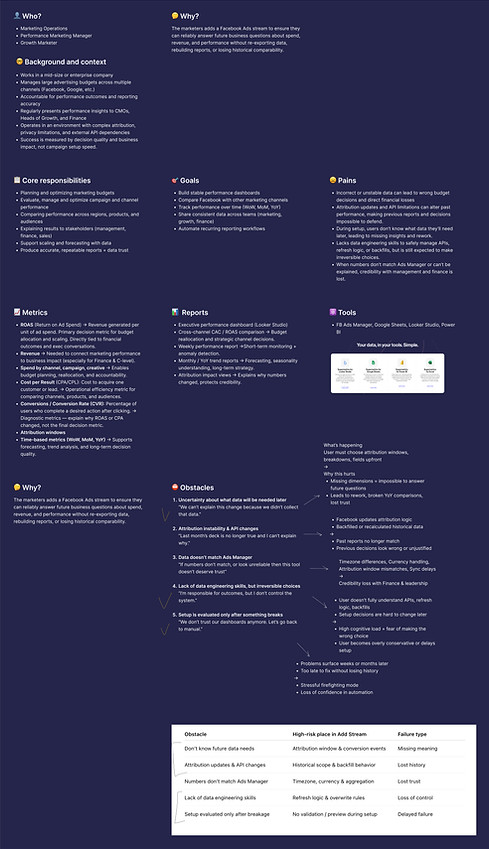
Concentrating on their core responsibilities and goals helped me define the fundamental question: Why even add a stream?
📋 Core responsibilities
-
Planning and optimizing marketing budgets
-
Evaluate, manage and optimize campaign and channel performance
-
Comparing performance across regions, products, and audiences
-
Explaining results to stakeholders (management, finance, sales)
-
Support scaling and forecasting with data
-
Produce accurate, repeatable reports + data trust
🎯 Goals
-
Build stable performance dashboards
-
Compare Facebook with other marketing channels
-
Track performance over time (WoW, MoM, YoY)
-
Share consistent data across teams (marketing, growth, finance)
-
Automate recurring reporting workflows
🤔 The "Why add the stream?"
"The marketers adds a Facebook Ads stream to ensure they can reliably answer future business questions about spend, revenue, and performance without re-exporting data, rebuilding reports, or losing historical comparability."
However, the road to this "Why" has the next key obstacles.
⛔️ Key obstacles
-
Uncertainty about what data will be needed later
“We can’t explain this change because we didn’t collect that data.”
-
Attribution instability & API changes
”Last month’s deck is no longer true and I can’t explain why.”
-
Data doesn’t match Ads Manager
“If numbers don’t match, or look unreliable then this tool doesn’t deserve trust”
-
Lack of data engineering skills, but irreversible choices
“I’m responsible for outcomes, but I don’t control the system.”
-
Setup is evaluated only after something breaks
“We don’t trust our dashboards anymore. Let’s go back to manual.”
Discovering the gap: Configuration completion vs. decision integrity
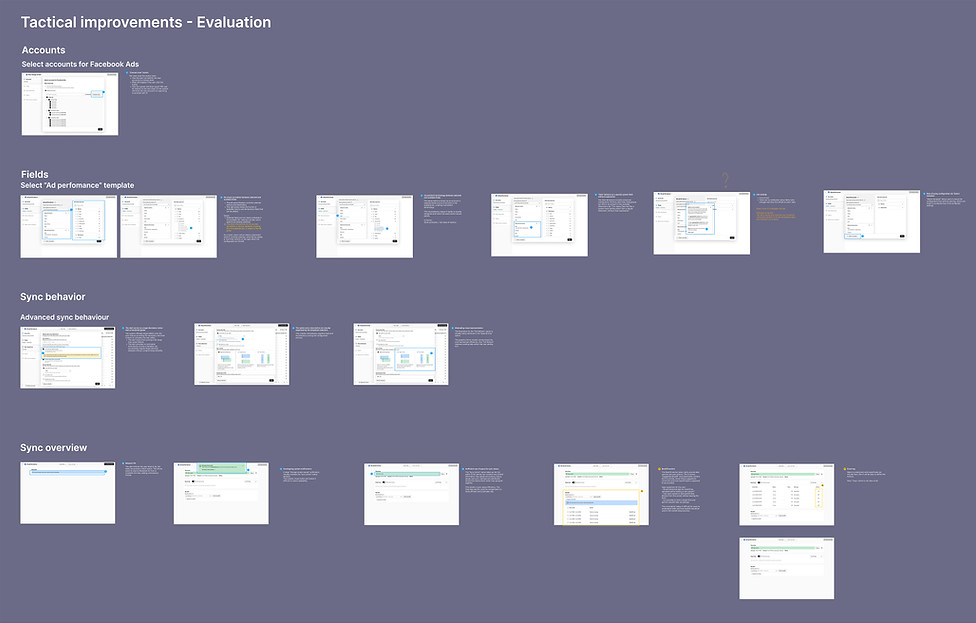
With this context in mind, I dove into the flow evaluation. To be clear, the flow wasn't "bad". It had some very strong foundations that tried to navigate the user through the complexity of data sync. However, I saw a few critical gaps that I couldn't ignore.
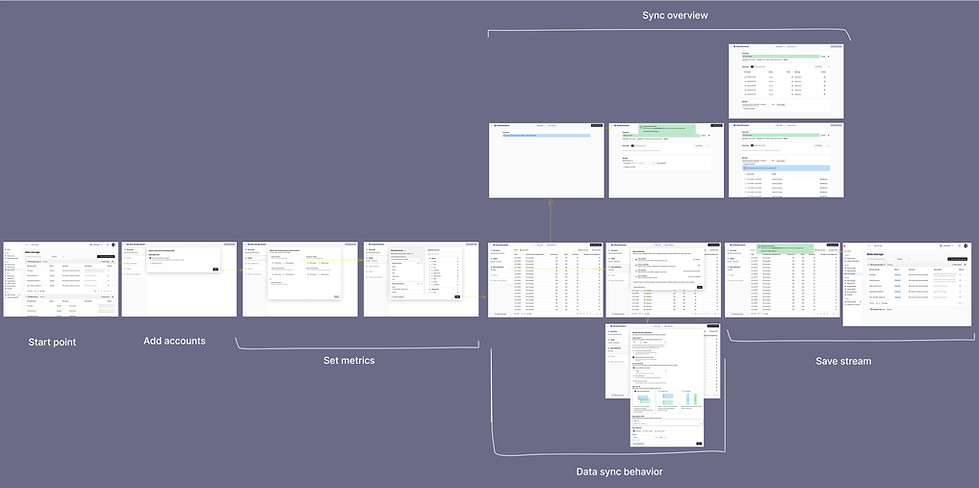
The user flow
💪 Strengths
-
Logical flow segmentation
The step-based navigation (Accounts → Fields → Sync behavior) breaks down a complex process into understandable, sequential decisions.
-
Template-first setup
The “Select template” entry point helps marketers to prioritize speed and pre-validated schemas over manual configuration.
-
Data table preview as trust builder
The ability to "Refresh preview" at the bottom of the screen is a "Trust builder". It allows the marketer to see the "Mirror" of their data before committing to the stream.
🔴 Key gaps
-
Validation happens too late
Users still have to complete the full setup and wait for processing before they can validate whether the resulting data actually supports their use case and metrics goals. This results in time consumption multiplied by the number of misconfigured attempts.
-
High-impact decisions require technical judgment
The current flow asks users without data engineering experience to make irreversible choices about attribution logic, historical data handling, and sync behavior without clear guidance on business impact.
-
Configuration-first, not outcome-first
The flow is structured around technical setup steps (fields, sync behavior, templates), while marketers think in terms of reporting outcomes, comparability, and decision readiness.
Users were committing to sync decisions before knowing if the data would actually support the business question behind it. They were following all the steps, trusting the green light, and still scaling a mistake.
Marketers are responsible for outcomes, but they shouldn't have to be responsible for system logic. By the time errors appear, trust is compromised, reports shift, and budgets are already spent. "Completed" does not mean "safe to decide."
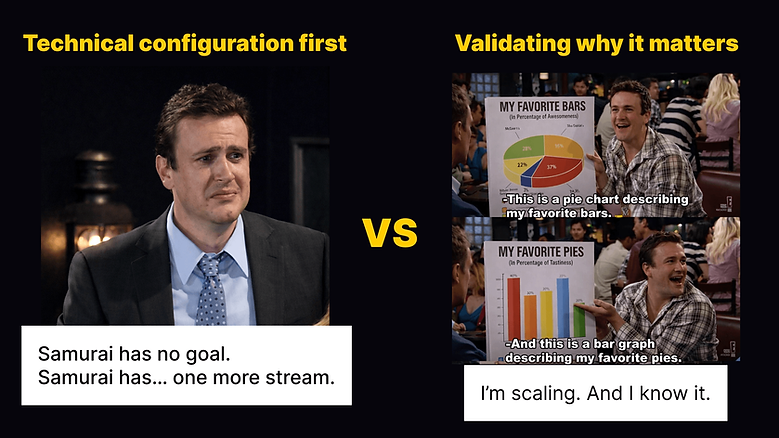
The "Dare to" moment: Flipping from "configuration-first" to "outcome-first"
After evaluation, I realized I could not just propose tactical UI improvements that help only with the general user flow, however I decided to take a more radical, powerful approach.
I dared to propose flipping the finish line: moving from "configuration-first" to "outcome-first."
Hypothesis
IF we introduce a guided, outcome-driven wizard that helps users validate expected results and data behavior before committing to long sync and processing, and proactively protects historical data from attribution and API changes,
THEN we will reduce wasted time caused by misinterpreted metrics, unstable historical results, and repeated setup attempts, that leading to faster time-to-value and fewer incorrect or abandoned streams.
Note: To see how I plan to validate this hypothesis and measure the success of the proposal, check the Measures and Potential Business Impact section at the end of this case study.
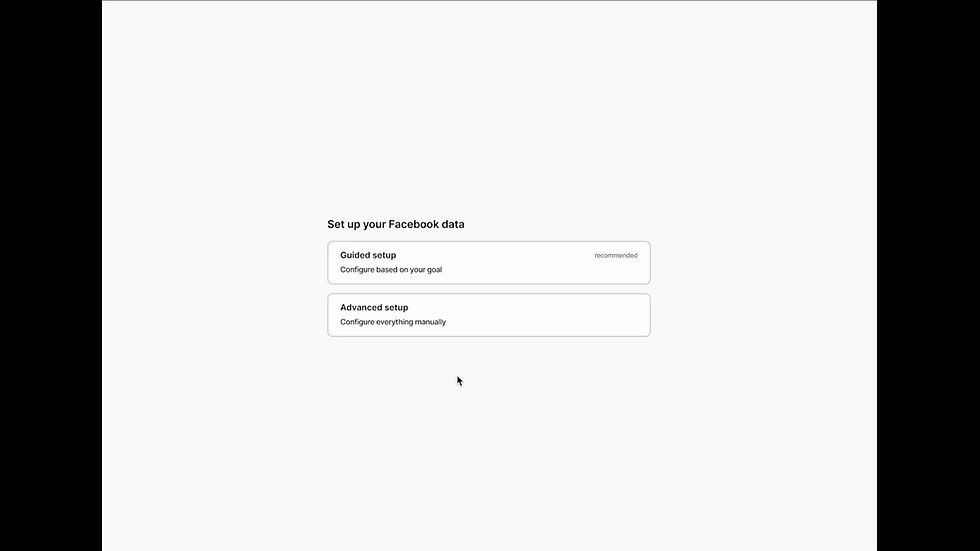
I divided the "Add new stream" experience into two ways to accommodate different user needs:
-
Guided setup (The radical proposal)
A goal-based journey where the system handles the technical complexity. You tell the system what you want to achieve, and it builds the logic for you.
-
Advanced setup (The tactical evolution)
A refined version of the existing flow for advanced users who need manual control, but now equipped with better "guardrails" and smarter validation.
The new user flow diagram (Full version)

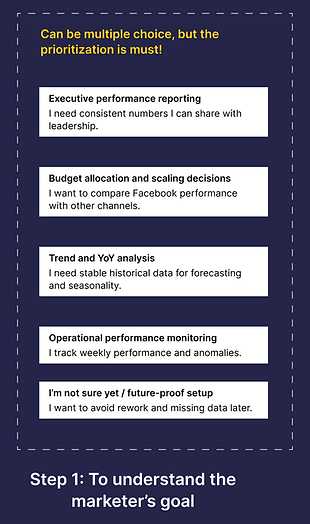
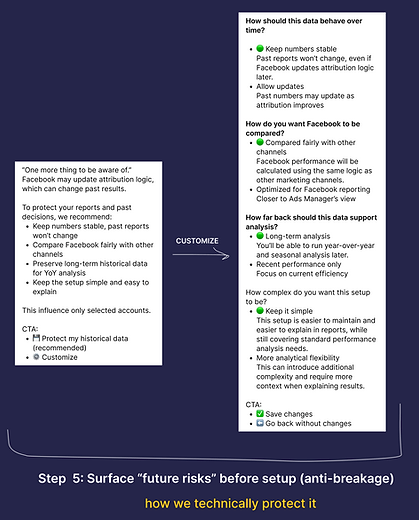
This diagram demonstrates 7 steps of the guided outcome wizard:
-
Define the goal. What does the marketer need to achieve?
-
Outcome preview. A "Data mirror" shows expected results before committing to the full sync.
-
Choose accounts. Align data sources with the goal.
-
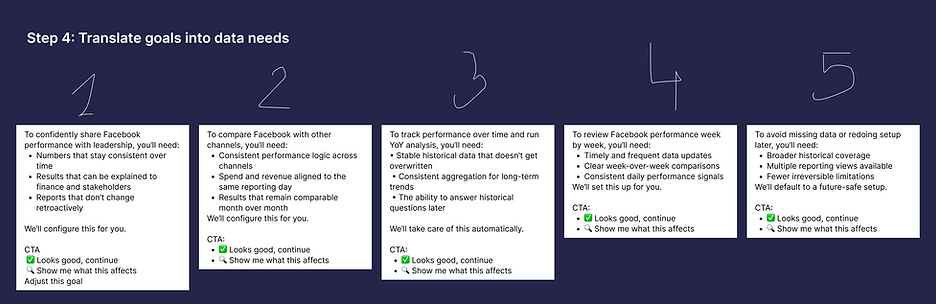
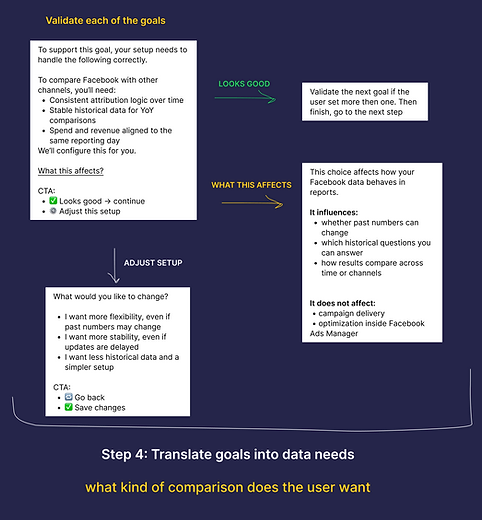
Translate goals into data needs. Metrics, dimensions, and backend structures are automatically set, showing what reports and insights users can expect.
-
Surface potential risks. Highlight future breakage or historical data issues. Responsibility is shared between system guidance and user decisions.
-
Preview before committing. Users review and adjust every choice before the stream is created.
-
Success! A clear "Congrats" and an easy way to add the next stream.
A few detailed screenshots of the diagram
Design proposals: Transforming hypotheses into high-fidelity solutions
When I started sketching the solution, my first instinct was a trendy AI Chatbot. It sounds cool, right? Just tell the bot what you want and let the LLM do the heavy work.
However, in high-stakes data environments, unlimited freedom can be a trap. A blank input field creates high cognitive load. Users don't always know the exact technical prompt to ask for, specifying can be also challenging and blurred, that's can as a result cause off-target data sync.
From a system perspective, a chatbot forces us to handle infinite, unpredictable edge cases in user prompts, which often leads to a fragmented or "broken" experience when the AI misunderstands the intent.
Instead, I chose a structured wizard. It wasn't about restricting users. It was about giving them a safe, controlled path to a professional result:
-
Predefined, validated options turn a chaotic technical task into a reliable process.
-
Users need predictable results. A wizard ensures that Step A always leads to a valid and expected Step B.
-
The system and the user share responsibility. The wizard handles the "how" (API logic), while the user stays in control of the "why".
Disclaimer: I truly believe that AI chat is a viable solution that can and will work. However, its success depends on the effort we put into helping users specify their requests to get the exact results they need. Right now, handling infinite and unpredictable edge cases through a chat interface often leads to a "trial-and-error" experience, whereas a structured path provides the certainty required for high-stakes data.
Guided setup
Advanced setup
Was
Start point -> Add account -> Set metrics -> Data sync behavior -> Save steam + Sync overview page
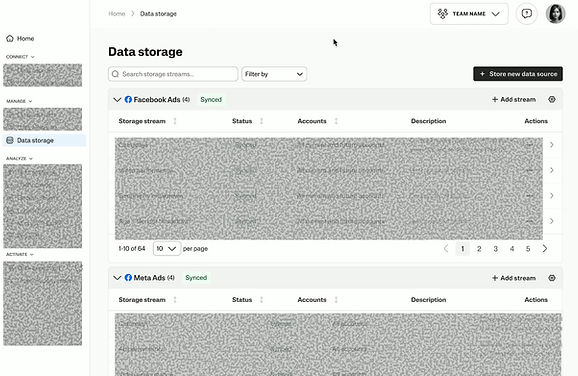
Became (Proposal to improve the existed flow)
Start point -> Define the goal(s) -> Outcome preview -> Choose accounts -> Set metrics -> Sync behavior -> Preview before committing -> Save steam + Sync overview page
Additionally, I prepared the improvement suggestions for the smaller UI elements.
Measuring the proposal
To validate the "outcome-first" hypothesis and ensure the new flows actually solve the core business problems, I’ve defined the following success metrics and potential impacts.
📊 Measurements
Time to value
-
Average time to first valid, usable stream
-
Time spent in setup per successful stream
-
Time between first setup and first data used in report/dashboard
Configuration quality
-
% of streams edited or recreated within X hours/days after creation
-
% of streams deleted and recreated
-
Number of field changes after first sync
-
Number of support tickets related to wrong metrics or wrong setup
-
Time to resolution for setup-related issues
Adoption & engagement
-
Wizard completion rate
-
Drop-off per step in wizard
-
% of users who activate stream after preview
-
% of people who choose Guided vs Advanced setups
💼 Potential business impact
Customer value
-
Faster time-to-value for marketers
-
Higher confidence in data → better decision making
Operational efficiency
-
Fewer failed or corrected streams → lower processing costs
-
Reduced support tickets & troubleshooting
Revenue and retention
-
Higher satisfaction → stronger retention among data-heavy clients
-
Trusted platform → potential positive word-of-mouth → indirect growth
Final thoughts
This case was a deep dive into the "engine room" of a complex domain. My experience with large-scale systems shows that while contexts and goals change, the need for structural integrity remains constant.
By leveraging AI to fast-track through the technical learning curve, I shifted the focus to decision integrity.
We can’t always prevent a user from making a wrong choice, but we must design systems that stop scaling mistakes. When errors do occur, the system should empower users to identify and fix them before they turn into disasters.
Ultimately, it’s not about the number of synced streams, it's about providing confidence when the stakes are high.